

Charlotte-area standby generator guide
Standby generator replacement: what existing equipment can stay?
Prepare for a replacement evaluation with questions about existing transfer equipment, fuel supply, the outdoor site and your current outage plan.
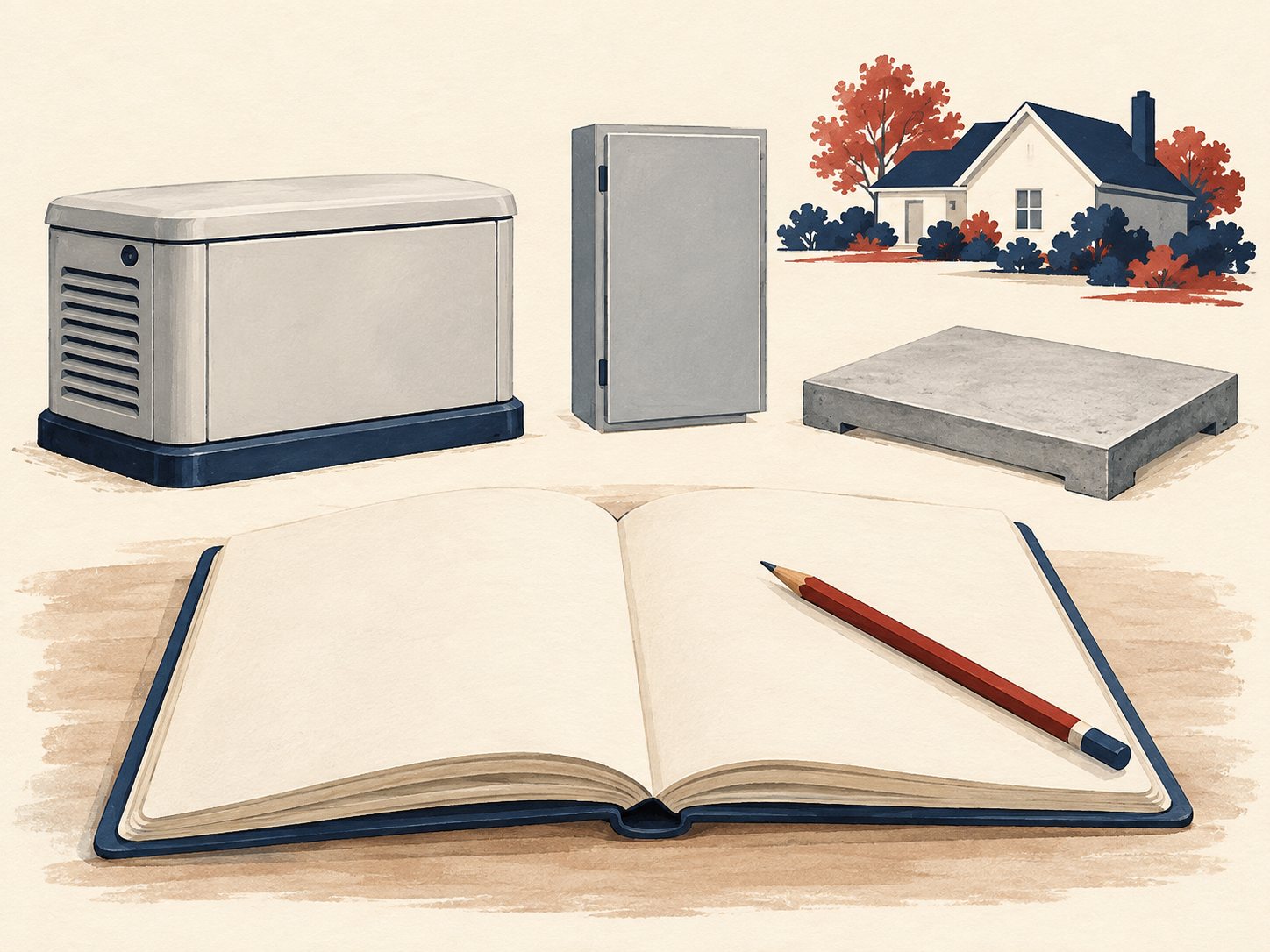
An existing standby generator gives you a starting point for replacement planning. It does not settle whether the transfer switch, fuel connection or installation site can serve the new unit. Ask the installer to identify what can stay, what needs replacement, and what still needs confirmation before you approve the work.
This guide is for a permanently installed residential standby system. If you are still deciding whether to repair the generator, start with Parks' generator repair service or the guide to generator life expectancy.
Start with the old installation records
Bring the original proposal or invoice to the replacement appointment if you have it. Manuals and service records can help identify the equipment already installed. Gather what you can from paperwork or labels visible outside closed equipment; let the installer find anything that requires opening an enclosure.
- The generator's manufacturer and model, plus any transfer-switch details in your records.
- Previous repair notes and the problem prompting replacement.
- Changes to the home or appliances since the original installation.
Leave electrical testing and fuel-system checks to qualified professionals. A standby generator can start automatically. Do not open the transfer switch, remove panel covers, disconnect fuel, or attempt the replacement yourself. Generac's owner manual assigns electrical connections and fuel work to qualified personnel.
Ask whether the existing transfer switch fits the new generator
The automatic transfer switch moves the home's power supply between the utility and generator. It is part of the replacement decision even when it appears to work normally.
Compatibility depends on the equipment. For example, KOHLER's RXT 100-amp product page identifies specific KOHLER generator controllers it supports. Generac also identifies controller requirements in its automatic transfer-switch specifications. These examples explain why a matching brand name alone does not establish compatibility.
Ask the installer to check the existing switch against the exact proposed generator model and assess its condition. If the proposal keeps it, request the basis for that decision. If it replaces it, ask whether the reason is compatibility, condition, capacity or a requirement of the installation. You do not need to interpret a wiring diagram to ask for that explanation.
Recheck the fuel supply and outdoor site
A connection that served the old generator needs an evaluation for the proposed unit. Generac's 10–26 kW owner manual records fuel inlet-pressure requirements and relates fuel-flow information to pipe size and length. That is a model-specific check, not a reason to assume every project needs a larger gas line.
Ask whether the existing supply is adequate and whether any utility or propane-provider work belongs outside the installer's scope.
The pad and location deserve a separate answer. Have the installer check the proposed unit's support and placement requirements, airflow, nearby openings, and exposure to water. The same Generac manual addresses airflow and standing-water risks for its listed models. Use the requirements for your proposed equipment and property; an old location does not establish that a different unit will fit there correctly.
Compare the replacement with today's outage plan
Tell the installer what changed since the old system was installed. For example, you may have added a second HVAC system or replaced a gas appliance with an electric one. Explain which equipment you want available during an outage and what can wait.
Ask how existing load-management controls fit that plan. These controls can add or pause selected loads according to the system design. KOHLER's TP-7092 manual describes model-specific controls that manage loads by priority. It does not establish that old controls will work with every replacement.
Parks' generator installation service explains how its on-site evaluation considers household loads, fuel supply and transfer equipment. Use that evaluation to settle the replacement scope.
Get the keep-or-replace decisions in writing
An equipment price leaves questions unanswered if the proposal does not explain the existing system. Use these questions to make the scope clear before comparing estimates.
| Existing part or project item | Question for the installer |
|---|---|
| Automatic transfer switch | Will it stay, and what supports its compatibility and condition? |
| Fuel connection | Can it support this unit, and who handles any required supply changes? |
| Pad and outdoor location | Does the proposed unit meet its support and placement requirements here? |
| Load-management equipment | What stays, and which household loads will the finished design support? |
| Removal and final testing | Who removes the old unit, and what operation will be demonstrated at handoff? |
Keep unresolved items visible. Suppose a quote leaves utility work subject to confirmation. Ask who will obtain that answer, how it could affect the price, and whether it must happen before installation. That makes the remaining decision easier to follow without assuming the work is included.
Confirm approvals for the job address
Mecklenburg County's generator guidance requires permits and inspections for a generator installation connected to permanent building wiring. Its electrical information for homeowners also says electrical changes and modifications are subject to permits and inspections.
Ask the installer which approvals apply to this replacement and who will arrange them. For homes elsewhere in the Charlotte region, including nearby South Carolina communities, confirm the process with the office serving the property. Do not assume an earlier installation's approval resolves the new work.
Plan a replacement evaluation with Parks
Bring your equipment records and current outage priorities to the conversation. Explore Parks' standby generator services and installation and replacement, then use Schedule Service or call (704) 275-1017 to discuss your home.
Sources
Manufacturer documents below apply to their named equipment. The installer must check current requirements for the actual proposed models and property.
- KOHLER RXT 100-amp transfer switch and Generac automatic transfer-switch specifications: equipment and controller compatibility.
- Generac 10–26 kW owner manual: qualified work, fuel data and site conditions. KOHLER TP-7092: model-specific load management.
- Mecklenburg Generator Safety and electrical information: local approval requirements. Sources checked October 8, 2026.