Start with how pollen gets inside
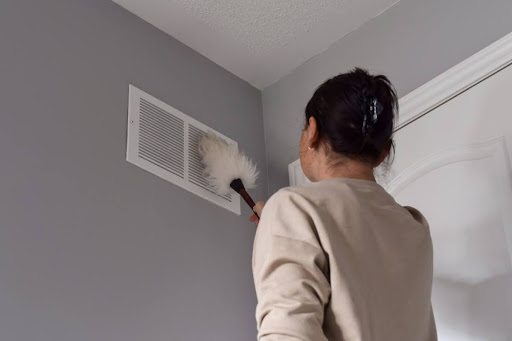
Seeing pollen on the outdoor unit does not mean that unit is blowing it through your supply vents. EPA explains that most home heating and cooling systems do not mechanically bring fresh outdoor air inside. Open windows, doorways, building gaps and any dedicated ventilation intake are different routes into the house.
That distinction changes the first step. If windows have been open, reduce that incoming pollen before buying another device. If you have an outdoor-air intake or a separate ventilation system, ask how its filtration is maintained. Have the system identified before changing its controls.
CDC recommends keeping windows closed during pollen season, changing clothes after outdoor activity, and showering to remove pollen from skin and hair. These steps reduce what you carry into the rooms where your HVAC system recirculates air. Filtration supports that routine; it does not replace it.
Choose the filter your equipment can use
MERV is a filter's particle-capture rating. Higher ratings capture particular particle sizes more effectively. EPA recommends MERV 13 or the highest rating your system's fan and filter slot can accommodate. The compatibility condition matters as much as the number.
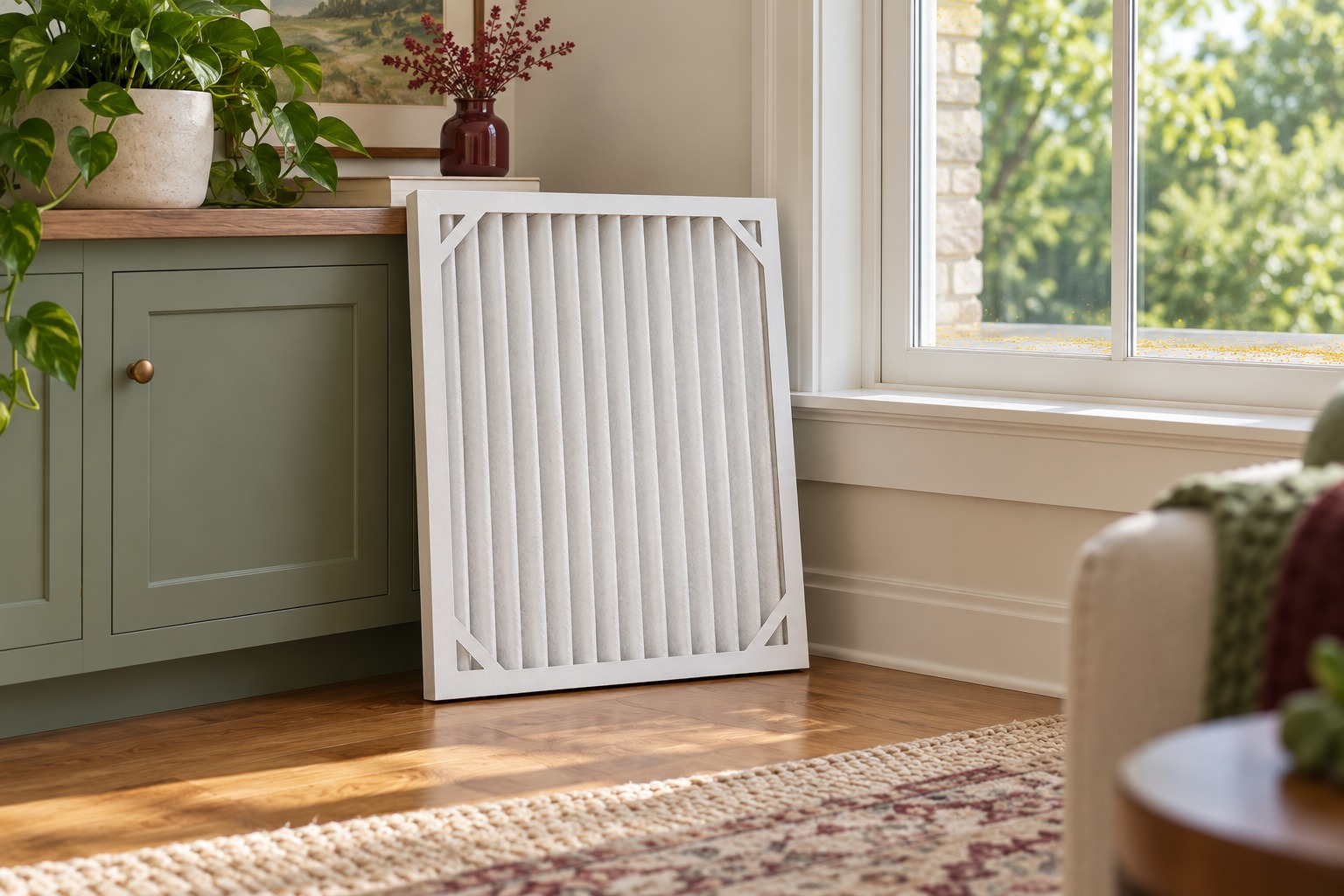
Before changing the rating, record the filter's printed dimensions and the equipment model. Check the equipment instructions or ask for a compatibility assessment. A filter that is too large, too deep or forced into the rack is a poor fit. EPA's home air-cleaner guide calls for a snug fit without bending or crushing the filter, so air cannot bypass its edges.
Do not treat a HEPA filter as a universal replacement for the filter in your furnace. Start with the equipment's approved filter options. If a higher rating produces a new whistle or noticeably weaker airflow, record what changed and arrange an HVAC service assessment. Those observations help a technician investigate; they do not establish a diagnosis.
A practical order of checks
Match the fix to the pollen pathway
- 1. EntryWindows open or time spent outdoors? Reduce incoming pollen and change outdoor clothes.
- 2. Central filterCheck size, edge fit and condition. Confirm the system can use the proposed MERV rating.
- 3. One roomNeed additional particle filtration? Match a portable cleaner's CADR to that room's size.
Practical sequence based on CDC pollen guidance and EPA filtration guidance, checked October 22, 2026.
CDC
·
EPA
Inspect the filter instead of guessing its lifespan
Follow the filter and equipment manufacturers' replacement instructions. Check its condition between changes, especially when your household is bringing in more outdoor material. A reminder is useful, but it cannot tell you whether the filter is loaded, damaged or sitting loosely in its rack.
Write the installation date on the frame or keep a phone note. At the next check, record its condition and whether airflow has changed. Replace a dirty filter according to its instructions rather than assuming every pleated filter lasts six months. EPA notes that an overloaded filter does not work well.
For a bedroom, consider room-sized filtration
A portable air cleaner can supplement central filtration in the room where you use it. Choose its particle clean air delivery rate, or CADR, for the room's size. EPA notes that portable cleaners serve a room or area, while central filters serve the home. Neither removes every pollutant. Keep the window closed when outdoor pollen is the problem, and follow the cleaner's placement and filter instructions.
Use Charlotte-area pollen information carefully
Check where a pollen report was measured and the date it covers. North Carolina DEQ's state-operated sampler is in Raleigh. Its reports describe collected samples, and DEQ says it does not forecast future pollen levels. A Raleigh reading is not a measurement outside a home in Charlotte, Indian Trail or Fort Mill.
For a property on either side of the state line, look for a report or forecast that identifies its location and timing. Use that information to plan outdoor activity and window opening. Use your own filter's condition and the manufacturer's instructions to decide on replacement.
Duct cleaning needs a reason
Pollen season alone does not establish that the ducts need cleaning. EPA recommends cleaning as needed, rather than routinely. Reasons to consider it include substantial visible mold in hard-surface ducts or other HVAC components, vermin, or excessive debris and particles released from supply registers. Ask the provider to show and explain the condition before agreeing to work.
Begin with the observable problem: a filter that will not fit, reduced airflow, material coming from a register, or a room that needs additional filtration. Bring those observations to an indoor air quality assessment. Keep a photo of the filter label and your equipment model handy when you contact Parks. You can also review maintenance options, current offers and customer reviews.
Get help today
(704) 275-1017
Common pollen and filter questions
Will a better HVAC filter keep all pollen out?
No filter removes every pollutant. Reduce incoming pollen, check filter fit and use a rating your system supports. Filtration can reduce airborne particles after they enter the home.
Can I put a MERV 13 filter in any system?
Confirm compatibility first. EPA recommends MERV 13 or as high a rating as the system fan and filter slot can accommodate. Check the equipment instructions or ask an HVAC technician.
Should I replace my filter every month?
Follow the manufacturer's instructions and inspect the filter between changes. Replace it when needed; a calendar reminder does not measure its actual condition.
Do I need duct cleaning every pollen season?
EPA does not recommend routine duct cleaning. Have a specific condition evaluated, such as substantial visible mold, vermin or excessive debris released from registers.
Sources
- EPA: outdoor air entry for windows, infiltration and mechanical ventilation.
- EPA: MERV ratings for particle capture and system compatibility.
- EPA: home air cleaners for filter fit, replacement, CADR and filtration limits.
- EPA: duct-cleaning guidance for condition-based evaluation.
- CDC: pollen exposure for windows, clothing and outdoor activity.
- NC DEQ: pollen monitoring for the Raleigh sampler's location and reporting limits.
Homeowner education from Parks Heating Cooling Plumbing & Electrical, using the public sources linked in this guide.