



What to Check After a Charlotte Storm Knocks Out Power to Your HVAC System
Leave the system off until you rule out downed lines, standing water, flooding, and visible equipment damage. This Charlotte-area checklist shows where a homeowner check should stop.
The short answer
If a severe Charlotte storm knocks out power, leave the HVAC system off until you have ruled out downed lines, standing water, flooded equipment, and visible damage. From dry ground, look for a shifted outdoor unit, branches or debris against it, damaged wiring or refrigerant lines, and water around the cabinet. Indoors, check for water near the air handler or furnace and note what the thermostat shows.
Do not open an equipment panel, reach into the outdoor unit, or keep trying to restart a system that trips, hums without starting, smells burned, or was exposed to floodwater. Those are stop conditions for an HVAC technician or licensed electrician.
Why this matters after a Charlotte outage
On August 21, 2026, a severe storm brought down trees and power lines around Charlotte. WSOC-TV reported more than 45,000 Duke Energy customers without power across the Carolinas, including more than 23,000 outages in Mecklenburg County. That combination of wind, debris, and interrupted electrical service is why the first question is whether the system is safe to test, not whether the thermostat needs a reset.
Report the outage to the utility before you troubleshoot anything at the house. Duke Energy's storm safety center lists three ways to do it: text OUT to 57801, call the utility, or report it online. If a line is down, stay away from it and from anything it is touching.
Stop before you touch the HVAC system
Duke Energy's after-the-storm guidance says to stay away from downed power lines and from areas that may be hiding lines, such as floodwater and debris. It also says to disconnect or turn off nonessential electrical equipment that may start automatically when power is restored. Leave the HVAC system off while you make the hazard check below.
If water reached the home's electrical system, the HVAC disconnect, the indoor air handler, or the outdoor unit, leave the equipment off. FEMA's current flood guidance notes that HVAC equipment is generally not designed to withstand inundation. A unit that sits outdoors in rain is different from a unit that has been submerged.
Inspect the outdoor unit from dry ground
Once the storm has passed and the approach is dry and clear of electrical hazards, make a visual inspection without removing panels or touching the equipment. Look for:
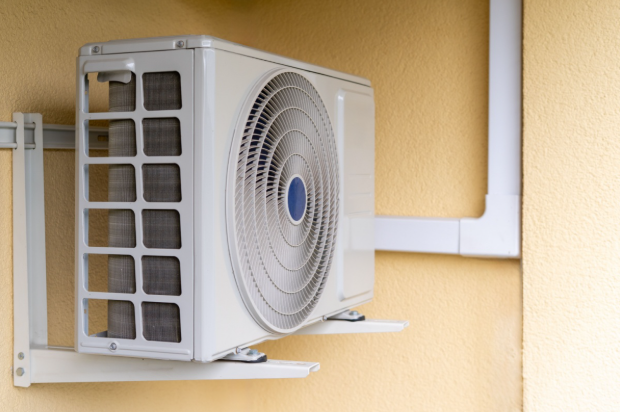
- a condenser or heat pump that is leaning, shifted on its pad, or partly covered by a fallen limb;
- debris wedged into the fan guard or packed against the coil;
- loose conduit, exposed wiring, dents, or scorch marks; and
- a visible high-water mark or standing water around the cabinet.
Take photos from a safe distance. Do not straighten the cabinet, pull debris from inside the fan guard, or open the service disconnect. A technician needs the equipment in its post-storm condition to identify impact, flood, or electrical damage.
Check the thermostat and indoor equipment
Inside, note whether the thermostat is blank, rebooting, displaying a delay message, or calling for heating or cooling. Check the floor around the furnace or air handler and look for water stains below attic equipment. If you can see ductwork in a basement or crawlspace without entering water or a damaged area, note any sagging, separated sections, or wet insulation.
A blank thermostat does not identify the failed part. It may reflect lost control power, a safety switch, or damage elsewhere in the system. Treat it as information for the technician instead of a reason to open the furnace or air-handler cabinet.
Do not use a restart as a diagnostic test
A visual inspection cannot rule out hidden electrical or flood damage. If you find any stop condition in this guide, leave the HVAC system off instead of changing thermostat modes or resetting a breaker to see what happens.
Carrier's emergency HVAC guidance says unusual noises, smells, smoke, repeat breaker trips, or water around the system are reasons to turn it off and call for professional help. Report exactly what you observed rather than attempting another restart.
If you are using a portable generator
CDC power-outage guidance says to run a portable generator outside, at least 20 feet from every door, window, and vent. Use a battery-powered or battery-backup carbon monoxide detector inside. Never run a generator in a garage, even with the door open.
Duke Energy adds one more limit for the same reason crews need clear lines: never wire a generator into the home's breaker or fuse box, because it can backfeed onto the power lines and injure the people working to restore them. Plug appliances directly into the generator instead.
If outages are a recurring concern, read about standby generator services in Charlotte.
What to tell the technician
A short, specific report helps separate an electrical problem from HVAC damage. Record:
- when the outage began and whether the power flickered before or after it;
- whether the thermostat was calling for heating or cooling when power failed;
- any standing water, fallen limbs, visible impact, odor, or unusual sound;
- what the thermostat displayed after service returned; and
- whether the indoor or outdoor equipment started on its own after power returned.
Share the photos you took from a safe position. If equipment was flooded, say how high the water reached and do not test it first.
Reduce the risk before the next storm
After the immediate problem is resolved, ask whether the system has surge protection at the equipment or electrical service. A whole-home surge-protection assessment can identify what is already installed and what protection is appropriate for the home's panel and major equipment. Surge protection does not make flooded or physically damaged equipment safe to run.
If the HVAC system still will not operate normally, schedule service through Parks Heating Cooling Plumbing & Electrical. Keep the system off until it can be evaluated when any stop condition in this guide is present.
Sources
- WSOC-TV: Duke Energy crews work to restore power after storms damage homes
- Duke Energy: Storm safety center, including how to report an outage
- Duke Energy: After the storm safety guidance
- CDC: What to do to protect yourself during a power outage
- FEMA: Wet Floodproofing Technical Bulletin 7
- Carrier: Your Guide to Emergency HVAC Repair
Safety note: This guide covers visual checks and stop conditions. It does not authorize electrical, refrigerant, gas, or flood-damage work. Call emergency services for an immediate fire, electrical, or carbon monoxide danger.

Parks Makes it Easy When you Need To Finance!
Contact Us Today
"*" indicates required fields
Become a Parks Comfort Club Member Today!
Sign Up for the Parks Comfort Club Plan & Receive Guaranteed Service Day or Night.
- Biannual high-performance system checks for HVAC
- Complimentary plumbing video inspection
- Lowered energy usage & lower monthly bills
- Unparalleled protection & peace of mind
- Member-exclusive service discounts & perks