An AC symptom is a starting point for diagnosis. Warm air, for example, can come from a setting, restricted airflow or a refrigeration problem. Note what the indoor fan and outdoor unit are doing before you call. Keep equipment panels closed and leave electrical testing, moving parts and refrigerant work to a qualified technician.
Choose the next step
Check, stop or call?
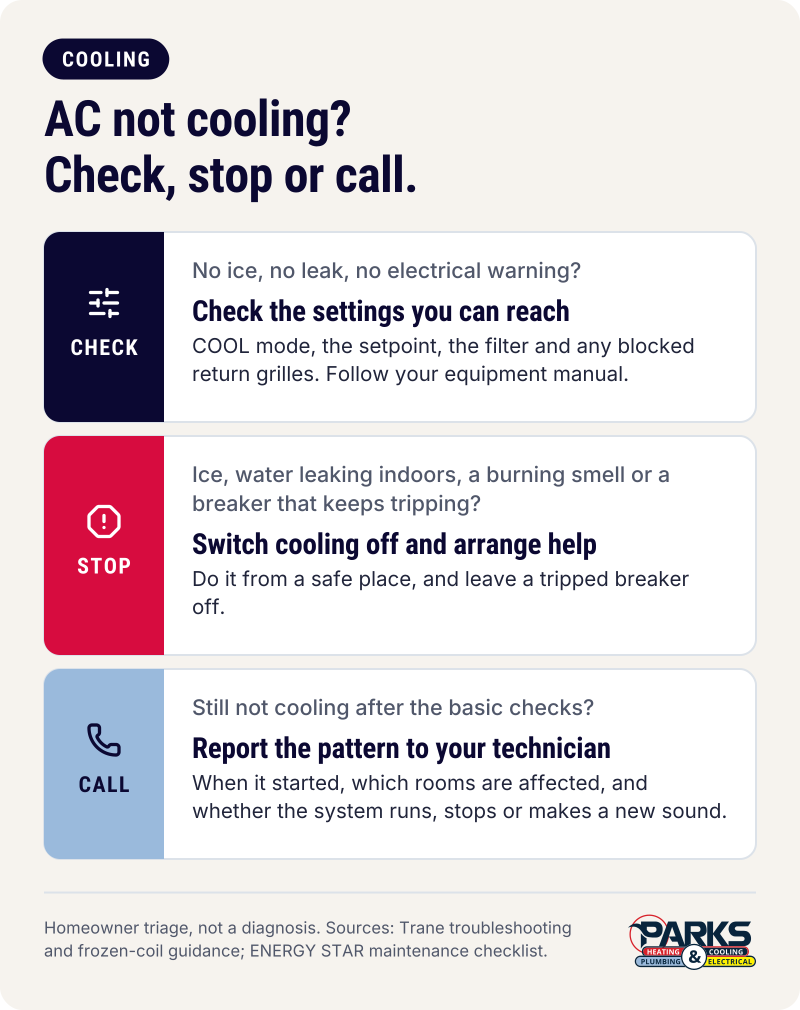
Homeowner triage, not a diagnosis. Sources: Trane's AC troubleshooting and frozen-coil guidance; ENERGY STAR maintenance checklist. Checked October 25, 2026.
1. The AC runs but blows warm air
Check that the thermostat is in COOL mode and the setpoint is below the room temperature. Then inspect the accessible filter using the shutdown and replacement instructions for your system. Move furniture away from return grilles. Trane lists thermostat settings, dirty filters, blocked coils and refrigerant problems among possible causes.
If those checks do not restore cooling, book an AC repair assessment. Tell the technician whether air is moving normally; weak airflow and strong-but-warm airflow are useful distinctions.
2. Little air comes from the vents
Look for an obstructed return grille and check the filter. If you do not know where the filter is or cannot reach it safely, ask for help. Avoid opening equipment cabinets to investigate the blower. Record whether airflow is weak throughout the house or only in one room.
A technician can check the blower and airflow through the system. ENERGY STAR includes blower adjustment and coil cleaning in professional maintenance because both affect cooling performance.
3. The AC will not turn on
Read the thermostat display. If it uses batteries, follow its instructions for replacement. Confirm the cooling mode and requested temperature. If a breaker has tripped, leave it off for service rather than making repeated restart attempts. Do not bypass a switch or remove an electrical cover.
A blank thermostat, a running indoor fan with a silent outdoor unit, and a completely silent system are different observations. Describe the one you see. A motor or control fault needs testing before anyone chooses a replacement part.
4. Water leaks around the indoor unit
Switch cooling off and arrange service. Keep clear of wet electrical equipment. Trane's water-leak guidance identifies blocked condensate drains, damaged pans and frozen coils as possible causes. Water on the floor does not establish which one has failed.
From a dry, safe spot, note where water appears and whether there is visible ice. Mention an attic or ceiling leak when booking. Leave drain disassembly and chemical treatments until the equipment and drainage arrangement have been identified.
5. Ice appears on a refrigerant line or coil
Set the thermostat from COOL to OFF. Trane advises stopping a frozen system and never chipping away the ice. Keep cooling off while arranging service; thawing alone does not resolve the cause.
Restricted airflow, a dirty coil and refrigerant trouble can each be involved. Ice does not prove the system needs a recharge. Take a photograph without opening a cabinet or touching equipment, and tell the technician whether the filter was dirty.
6. The AC starts and stops repeatedly
Short cycling means the equipment repeatedly stops before completing a useful cooling cycle. Avoid judging it by one fixed minute count: operating patterns change with conditions and equipment. Note whether it reaches the setpoint and whether the house feels clammy.
Trane identifies thermostat issues and oversized equipment as possible causes. A thermostat in direct sunlight can misread the space. Describe the pattern and location to the technician; have the cause checked before replacing the thermostat or system.
7. The AC runs for a long time without reaching the setpoint
Compare the actual room temperature with the requested setting. Note whether the problem is new, follows a setting change or affects the same rooms every day. Trane's continuous-running guide discusses settings, dirty components and equipment problems that can keep cooling from satisfying the thermostat.
Keep the outdoor unit's surroundings clear without reaching into it. If basic checks do not help, ask for an assessment of airflow, coils, controls and refrigerant. Runtime alone does not tell you which repair to buy.
8. A new noise or smell appears
Switch the system off if it develops an unusual electrical smell. Trane advises turning an AC off and contacting a professional for unpleasant odors. Report the smell and where you noticed it. Do not open the unit to tighten parts or investigate a motor.
For a new persistent noise, record it from a safe distance and arrange an inspection. A sound description helps with scheduling, but it does not identify a failed capacitor, compressor or loose part by itself. Keep hands and tools outside the enclosure.
9. The house is cool but still feels damp
Measure indoor relative humidity with a humidity meter, and write down the reading and room. EPA recommends keeping indoor humidity below 60%, ideally 30% to 50%. That is moisture-control guidance, not a diagnosis of the AC.
Report persistent dampness, condensation or a musty smell. Drainage, moisture entering the home and short cycling deserve different investigations. Ask the technician to evaluate the source before choosing additional equipment.
10. Cooling costs rise
Bring the bill dates, electricity use, thermostat settings and any recent equipment changes to the conversation. A higher bill alone cannot establish an AC failure or justify replacement. An equipment inspection is more useful than guessing from the system's age.
ENERGY STAR notes that dirty coils and incorrect refrigerant levels can reduce performance. Its checklist calls for professional checks of controls, electrical connections and drainage, plus monthly filter inspection. Use your system's instructions for the correct filter and cleaning or replacement method.
What belongs in a service visit?
Ask what the measurements show and how they support the recommended repair. For suspected refrigerant trouble, ask whether a leak or incorrect charge was found. EPA requires certification for technicians servicing equipment that could release ozone-depleting refrigerants. Leave gauges, refrigerant charging and circuit work to qualified professionals.
For preventive care, review Parks' AC maintenance service. For an active problem, use the repair path and describe the symptoms when requesting an appointment.
Plan for loss of cooling in high heat
For Charlotte-area homes in North Carolina, NCDHHS offers county heat alerts and heat-safety guidance. It advises going to an air-conditioned public building, such as a library or community center, when a home has no AC and the temperature is above 95°F. Arrange a cooler place while repair is pending, and confirm the location's current hours. These NC alerts do not establish conditions or cooling-center availability across the South Carolina line.
For AC service in Charlotte, call Parks at (704) 275-1017, or request service online.
Common troubleshooting questions
Why does my AC run without cooling?
Check COOL mode, the setpoint, the accessible filter and blocked return grilles. If cooling does not improve, arrange diagnosis; several different faults can produce warm air.
Can I keep running an AC that is frozen?
Turn cooling off and arrange service. Do not chip the ice away. The underlying cause needs to be identified before normal operation resumes.
Should I reset a breaker that keeps tripping?
Leave the circuit off and arrange professional help. Repeated resets do not repair the fault. Keep electrical covers closed and report when the trip occurred.
Does warm air mean I need more refrigerant?
Warm air has several possible causes, including settings and airflow restrictions. Have a qualified technician diagnose the cause before adding refrigerant.
How often should I inspect the filter?
ENERGY STAR recommends a monthly inspection. Clean or replace it as needed using the instructions for your filter and system, and ask for help if access is unsafe.
What should I do about indoor AC water leaks?
Switch cooling off and arrange service. Keep clear of wet electrical equipment. Report where water appears and whether you see ice from a safe location.
Does short cycling mean the AC is oversized?
Oversizing is one possible cause. Thermostat location and control issues can also be involved. Describe the operating pattern and have the cause checked before choosing equipment.
Can a smell tell me which AC part failed?
An odor alone does not identify a failed part. Switch the system off for an unusual electrical smell and contact a professional. Do not open the enclosure to investigate.
What humidity should I report to the technician?
Record the room and its measured relative humidity. EPA recommends keeping indoor humidity below 60%, ideally 30% to 50%; persistent dampness still needs its source checked.
Does a higher cooling bill mean I need a new AC?
A bill alone cannot establish equipment failure. Bring bill dates, electricity use, settings and recent changes to an assessment before choosing repair or replacement.
Sources
Public guidance checked October 25, 2026. Follow the instructions for your specific equipment.
- Trane: general AC troubleshooting
- Trane: frozen air handler
- Trane: short cycling
- Trane: indoor AC water leaks
- Trane: AC that keeps running
- ENERGY STAR: maintenance checklist
- EPA: moisture and humidity guidance
- EPA: refrigerant technician certification
- NCDHHS: extreme heat guidance and county alerts
Homeowner education from Parks Heating Cooling Plumbing & Electrical
The Parks HVAC Editorial Team prepares homeowner guides from the public technical sources linked in each article and Parks' established service information.