If your AC is not cooling in Charlotte, clogged filters, low refrigerant, or coil problems may be involved. Learn what to check first and when to call an HVAC technician.
In short
If your AC is not cooling, check the thermostat's Cool mode and fan setting, then the filter and the breaker. If the system will not power on, look for a tripped breaker, but do not try another reset if it trips immediately. Visible ice, a suspected refrigerant leak, or a burning smell all mean it is time to shut the system off and call an HVAC technician.
Check settings and airflow
Set the thermostat to Cool. If the fan is set to On, it can keep running while the compressor is not cooling; Auto runs the fan during cooling cycles. On a programmable thermostat, check whether the schedule has been overridden. If the thermostat batteries are dead, turn the thermostat off, replace them, and try resetting the temperature.
For little or no airflow, inspect the filter and follow your owner's manual to change it if dirty. Make sure safely accessible vents are not covered or closed. You can clear excess debris from around the outdoor unit if you can do so safely, but do not reach inside it.
If the AC will not turn on
Make sure the thermostat is set to Cool and its set temperature is lower than the current indoor temperature. If the system has no power, look at the home's electrical panel for a breaker in the Off or neutral position, or a blown fuse. You can also check the disconnect box near the outdoor unit. Reset a breaker only if you are comfortable doing so. If it trips immediately after a reset, do not try again; consult an HVAC professional.
Watch for ice and signs of low refrigerant
Ice on copper lines or the outdoor unit and excessive water drainage around the indoor unit can indicate a frozen evaporator coil. Restricted airflow or low refrigerant can cause the coil to freeze. If you see ice, switch the system off to prevent compressor damage and seek expert repair.
Low refrigerant may appear as a house that fails to stay cool, a system that runs continuously without reaching its set temperature, or short cycling. Refrigerant may be low because of a leak. Do not attempt to fix a suspected refrigerant problem yourself; contact an HVAC professional.
When to stop troubleshooting
Electrical buzzing, arcing, or a burning smell can indicate a serious electrical or motor-related problem. Stop troubleshooting and contact an HVAC professional rather than inspecting or testing electrical components yourself.
What we find on AC calls
When a Charlotte-area AC stops cooling, the cause is often one specific part, and finding it is most of the job.
- A failed part on the hottest stretch of the year. One customer's A/C lost a part during a heat wave, and the house hit 89 degrees inside. Alberto repaired the unit the same day the customer called, and the house started cooling down as soon as he pulled out of the driveway.
- A faulty compressor. Another customer's A/C went out on a Friday evening. Richard came out on Sunday, found a faulty compressor right away, gave an estimate, and replaced it.
- A small refrigerant leak. An upstairs unit wasn't cooling the house. Shaun ran full diagnostics, found a small refrigerant leak, and recharged the system, and the upstairs unit was cooling at full capacity again.
- Weak cooling nobody could explain. One homeowner had lived with weak cooling for a long time, and several visits from other companies hadn't solved it. Zackery spent over 3 hours tracking down a refrigerant leak and found the problem once and for all.
- When repair isn't worth it. In a house built in the 1980s, our technician showed the homeowner photos and videos of the unit and ductwork and said plainly that, given the unit's age, it was likely to fail within a year, so a repair might not be money well spent. The homeowner chose a new unit and ductwork.
How to request AC repair
We provide AC and heating repair, along with heating and cooling installation, maintenance, and replacement. Our services also include plumbing, including emergency plumbing, and electrical work. To request service from Parks Heating Cooling Plumbing & Electrical, call our main line or use Schedule Service online. A technician diagnoses the problem and explains options; replacement projects get a free estimate from a comfort advisor. If you are weighing repair against replacement, you can prepare questions about the system's age, size, and warranty coverage.
For more, see AC repair.
What customers are saying
"Richard was friendly and asked about my issue. He found out the problem right away. I had a faulty compressor. He gave me an estimate and explained the membership. I didn't feel pressured at all, and he switched out the compressor within mins." Monette A., Google review
"The cooling in my home has been weak for quite some time, and after several visits with other companies Zackery spent over 3 hours at my home to do everything possible to detect a leak and was successful in finding the issue once and for all." Adam, Google review
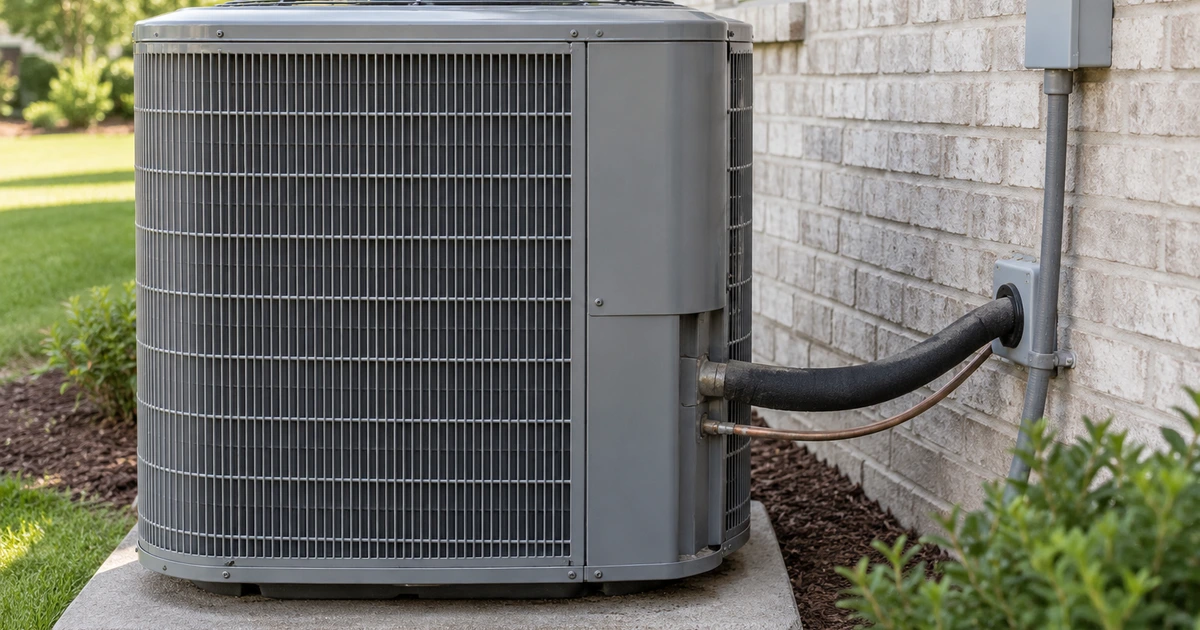
The image at the top of this post is an illustration, not a photo of a Parks job or technician.
Sources
- Air Conditioner Troubleshooting: 5 Common Issues - Trane®. Trane.
- Troubleshoot an Air Conditioner: 6 Steps to Fix an AC Not Working. Carrier.
- Central AC Compressor Not Turning On? Find Out Why - Trane®. Trane, 2025.
- Air Handler Troubleshooting: Why It Won’t Turn On | Carrier. Carrier.
- HomeCooling101. U.S. Department of Energy.
- "Cool On" Flashing on Thermostat: Causes & Fixes. Carrier.
Frequently Asked Questions
What can cause an AC to stop cooling?
Possible causes include clogged filters, leaking or low refrigerant, and frozen or dirty coils. If troubleshooting does not resolve the problem, contact an HVAC technician for help.
How does central air conditioning cool a home?
Cooling coils use refrigerant to remove heat and humidity from indoor air. A blower circulates air over the evaporator, dispersing chilled air. The condenser releases collected heat outside, while the compressor pumps refrigerant between the evaporator and condenser.
Why is "Cool On" flashing on my thermostat?
A flashing "Cool On" display typically indicates a built-in compressor-protection delay of 3-5 minutes. If blinking continues beyond 5 minutes or the system never starts, it may signal a problem needing attention.
The Parks HVAC Editorial Team writes with input from Parks technicians and leadership. Parks has served Charlotte-area homeowners since 1973.
Published October 27, 2026