Confirm what kind of inspection you booked
A home electrical safety assessment and a permit inspection have different purposes. For a safety assessment, ask the electrician which parts of the existing system the visit covers and what written findings you will receive. If you are deciding what to include, start with Parks' guide to electrical inspection scope.
A permit inspection checks construction work against the applicable requirements. Mecklenburg County describes its inspections as checks of field work against approved plans and the N.C. Building Code. If your appointment relates to a panel replacement, new circuit, or other project, ask the contractor for the permit number, the inspection stage, and who is arranging access. Booking a safety assessment does not replace that project inspection.
Prepare access without opening equipment
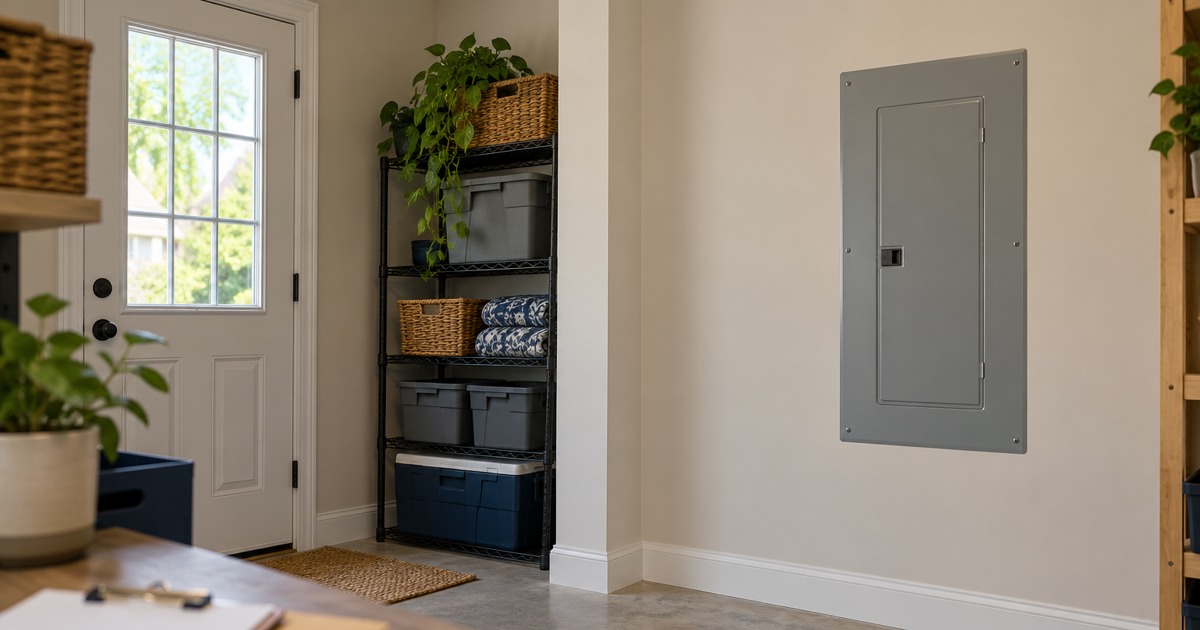
Move stored boxes, laundry baskets, and furniture out of the approach to the panel. Make normally accessible outlets and switches easy to reach. Tell the electrician about locked rooms, pets, or areas that are difficult to access; ask how to handle them before the appointment.
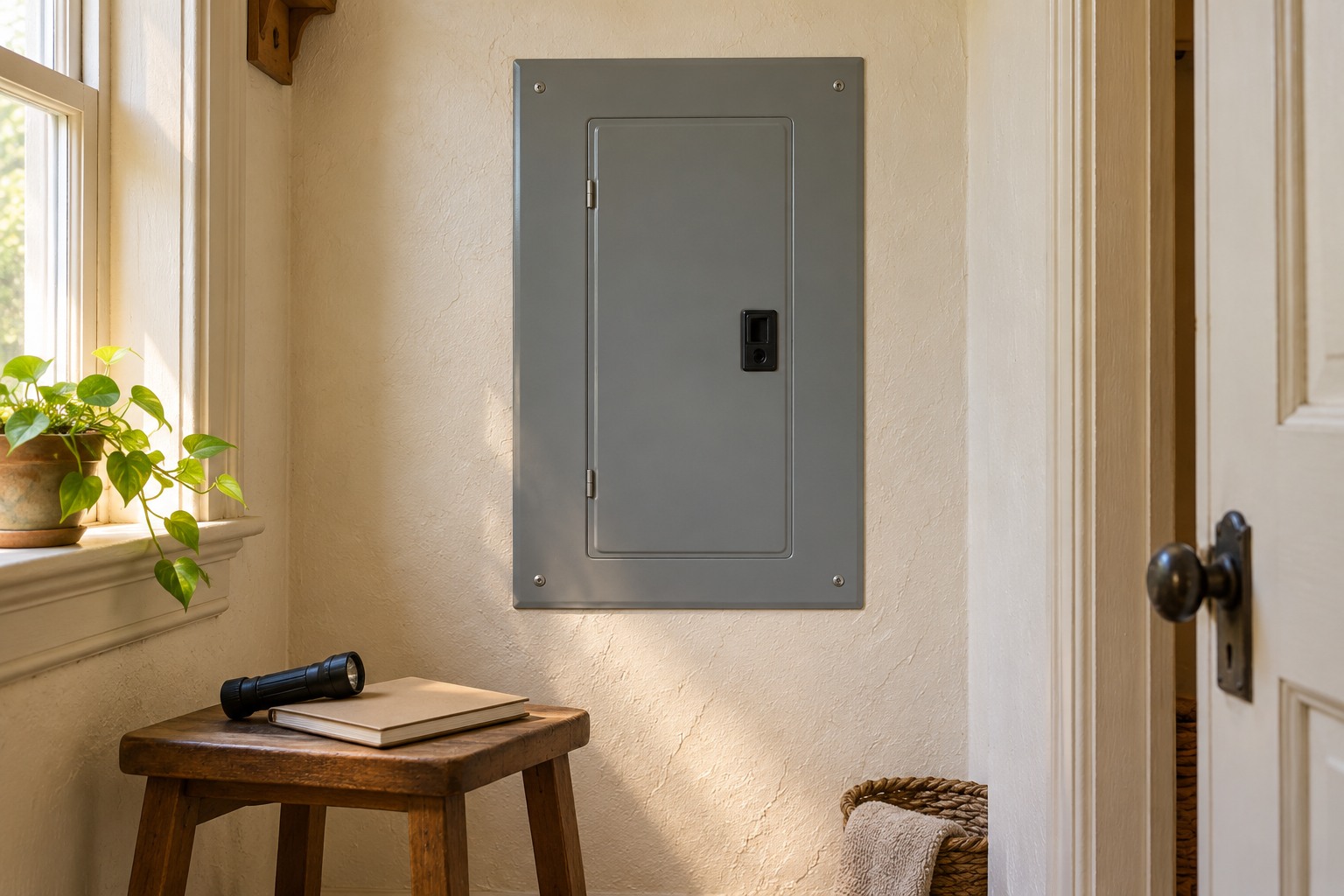
Leave electrical enclosures intact. The Consumer Product Safety Commission's home wiring guide specifically says not to remove the service-panel cover. Do not remove outlet plates, probe wiring, or climb into an unsafe attic to prepare for a visit. Describe an inaccessible area instead.
Prepare the space. Leave the electrical work.
Before the visit
- Clear the route to the closed panel.
- Gather reports and permit records you already have.
- List symptoms, locations, and recent changes.
- Discuss access and any planned power interruption.
For the electrician
- Remove covers and examine internal components.
- Test circuits and protective devices.
- Diagnose repeated trips or damaged wiring.
- Explain findings and the repair options.
Safety boundary: CPSC home wiring guidance and Mecklenburg electrical guidance. Checked October 28, 2026. Confirm the visit's testing scope when booking.
Make a short problem log
Write down the room, the device or circuit involved, what you noticed, and when it happens. For example: "The kitchen breaker tripped twice while the toaster and kettle were running." Record what has already happened; do not recreate a fault to demonstrate it.
CPSC identifies repeated breaker trips, flickering lights, unusual buzzing, heat discoloration, and shocks as warning signs. Tell the electrician about these when booking, especially if they are recurring. Keep away from damaged wiring and do not touch an outlet to check whether it is hot. For an active electrical fire, leave the building and call 911 from a safe place, following electrical-fire safety guidance.
Also list recent changes such as a new appliance, EV charger, renovation, or added use of extension cords. This gives the electrician useful questions to investigate. It does not establish that a panel upgrade is necessary.
Gather records and plan around testing
Put previous inspection reports, repair invoices, permit numbers, and equipment instructions in one folder. If you do not have them, say so. Ask whether the electrician needs any specific documents rather than delaying the visit to assemble a complete history.
Before inspection day, ask whether testing will interrupt power, which areas may be affected, and what you need to do. Tell the electrician if an interruption would affect essential equipment. Anyone relying on powered medical equipment should arrange their power needs with their equipment provider or care team before planned testing. Do not unplug everything or switch off circuits as a general preparation step.
If you have GFCI receptacles, note any existing problems and ask whether their operation is included in the visit. The CPSC home electrical safety checklist covers protective devices and household electrical hazards. Leave unfamiliar or damaged devices for the electrician to assess.
Check the permit office for the job address
For work in Mecklenburg County, use the county's electrical information for homeowners to discuss permit requirements with your contractor. Wiring changes generally require permits and inspections, with limited exceptions. Have the contractor confirm how the rule applies to the proposed work.
Across the state line, do not apply Mecklenburg's process to a South Carolina address. York County's permit page says its office serves unincorporated York County, Hickory Grove, and Sharon, and provides a GIS link to check jurisdiction. Use the office responsible for the property, which may be a municipality. Ask who holds the permit and how the inspection result will be documented.
Leave with findings you can act on
Ask the electrician to separate immediate safety concerns from repairs to schedule and optional improvements. Request the location of each finding, the proposed action, and any areas that were inaccessible or outside the agreed scope. Keep the report and estimates together.
If permitted work is involved, keep its inspection result as well. Mecklenburg makes inspection results and inspector notes available online. A safety assessment report and a permit inspection record answer different questions, so retain both when your project has both.
Electrical inspection preparation questions
Should I remove the electrical panel cover?
No. Leave the cover in place. Clear the approach and let the electrician handle opening equipment and testing.
Do I need to unplug appliances beforehand?
Ask for instructions for your appointment. Discuss any planned power interruption and essential equipment before testing. Do not unplug everything as a general rule.
What if I cannot find old permits or reports?
Tell the electrician what is missing and share the history you do know. Ask which records are needed for this visit and, for permitted work, confirm the current permit number with the contractor.
Does a safety assessment replace a county inspection?
No. A permit inspection checks the project through the responsible local authority. Confirm the permit, inspection stage, and scheduling responsibility with the contractor.
Arrange electrical service with Parks
Use Parks' electrical inspection service page to plan a visit. Describe your concerns and ask what the assessment includes, what access is needed, and whether testing will interrupt power. For a known fault, review electrical repair services.
Sources
Safety and local process guidance checked October 28, 2026.
- CPSC: Guide to Home Wiring Hazards, panel-cover safety and warning signs.
- CPSC: Home Electrical Safety Checklist, household devices and hazards.
- Mecklenburg County: Inspections, purpose and inspection records.
- Mecklenburg County: Electrical Information for Homeowners, professional work and permit requirements.
- York County: Residential Permits, address jurisdiction and permitting.
- FirstEnergy: Electrical Fires, leaving and calling 911.
Homeowner education from Parks Heating Cooling Plumbing & Electrical, using the public sources linked in this guide.